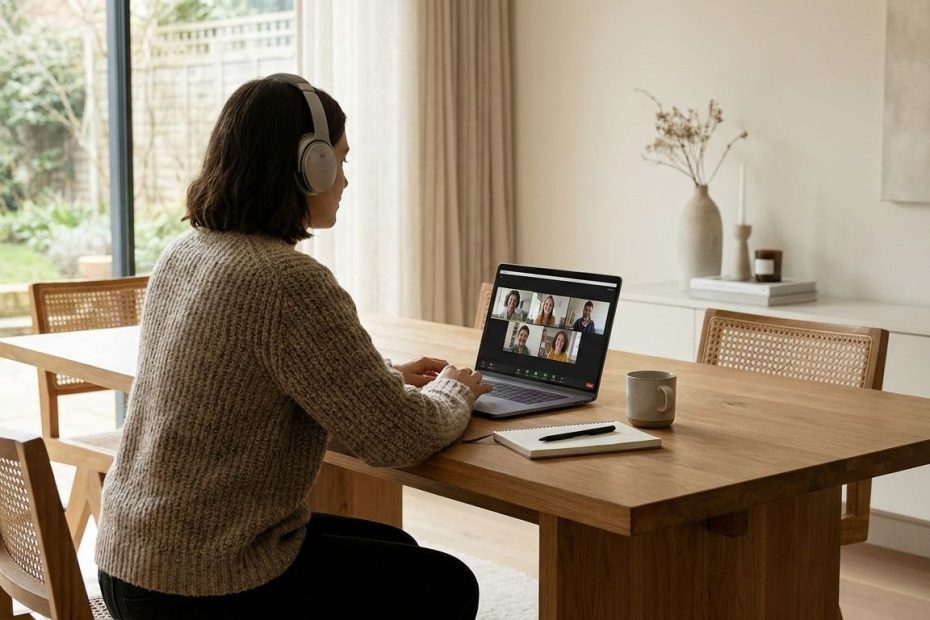
Building a professional network without an office works best when you make connection a planned part of remote work, not an after-hours chore. You grow it by increasing internal visibility, scheduling focused conversations, joining smaller industry communities, and using in-person moments selectively.
Remote networking feels harder because the office used to create casual contact for you. Now you need a simple system that fits your calendar, your energy, and your role.
This guide helps you build real professional relationships without becoming a constant poster, attending endless video calls, or forcing awkward conversations. You’ll learn how to stay visible inside your company, find mentors from a distance, use LinkedIn with purpose, and keep your network alive long-term.
How Do You Network When You Work 100% From Home?
You network from home by turning casual connection into a repeatable work habit. That means you plan small relationship-building actions the same way you plan project updates, meetings, and career goals.
The need is real. FlexJobs reported that 58% of American workers have the chance to work from home at least one day a week, and Buffer reported that 27% of United States employees work remotely full-time. When more people work outside a shared office, casual introductions, hallway follow-ups, and after-meeting chats no longer happen on their own.
Start with the people closest to your work. Build a short list of colleagues, managers, cross-functional partners, and people whose roles intersect with yours. Then create a low-pressure rhythm: one useful message, one short conversation, or one thoughtful follow-up each week.
Keep the goal practical. You’re not collecting contacts. You’re building familiarity, trust, and professional memory so people know what you do, how you think, and when to bring you into useful conversations.
Can You Build A Strong Professional Network In Remote Work?
Yes, you can build a strong professional network in remote work, but it has to be more intentional than office-based networking. The strongest remote networks mix internal visibility, one-to-one conversations, public contribution, and selective live interaction.
Zapier and YouGov found that 68% of remote workers say it’s harder to build or maintain coworker relationships when they’re fully remote. That doesn’t mean remote workers can’t build strong ties. It means the default work setup no longer supplies enough social contact by itself.
Think of your network in layers. Your inner layer is your team and manager. The next layer includes peers in adjacent departments, then mentors, past colleagues, industry peers, and people in niche communities.
A strong remote network also needs repeated contact. One message rarely creates a relationship. A useful comment, a follow-up after a meeting, a shared article, a quick thank-you, and a short check-in over time do more than one big networking push.
How Do You Build Visibility With Leaders When You Work Remotely?
You build visibility with leaders by making your work easy to see, easy to understand, and easy to connect to business priorities. Visibility is not self-promotion; it’s clear communication about outcomes, decisions, blockers, and progress.
Robert Half reported that 57% of remote workers worry working from home could hurt career advancement, with reduced visibility as the main reason. That fear makes sense when leaders see fewer informal signals. Your work may be strong, but remote settings reward people who communicate progress in public, concise ways.
Use your team’s shared channels with care. Post short updates when you finish a milestone, solve a recurring issue, learn something useful, or need input from another group. Keep the tone factual: what changed, why it matters, who helped, and what happens after that.
Ask your manager how they prefer to receive visibility updates. Some leaders want weekly summaries. Others want dashboard notes, written decision logs, or meeting recaps. Once you know the format, use it regularly so your contribution isn’t hidden inside private messages and scattered calls.
How Do You Make Virtual Coffee Chats Less Awkward?
You make virtual coffee chats less awkward by giving them a clear reason, a short time box, and a simple ending. A focused 20-minute conversation often works better than a vague 45-minute calendar invite.
Send a direct note that explains why you’re reaching out. You can say you’re learning how another team works, exploring a skill path, or interested in a recent project they led. Keep the ask small: one short call, no pressure, and a few questions prepared in advance.
Use three question types. Ask about their role, ask about how their team works with yours, and ask what they wish more people understood about their work. These questions create practical conversation without making the chat feel like a job interview.
Follow up the same day or the day after. Thank them, mention one useful takeaway, and offer something small in return when you can. That return could be a document, a connection, a relevant article, or a simple promise to keep them posted on a related project.
How Do Introverts Network In A Remote World?
Introverts can network well remotely by using written, asynchronous, and smaller-group interaction. Remote networking doesn’t require constant video calls or large events.
Buffer’s remote work research points to struggles that include staying home too often, difficulty collaborating, and loneliness. Those problems can hit introverts in a specific way: the need for connection is real, but back-to-back calls can drain energy fast. Written interaction gives you more control over timing and tone.
Use asynchronous communication to your advantage. Leave thoughtful comments in team channels, respond to industry posts with useful observations, send concise direct messages, and contribute to niche online groups where discussion is focused. This builds a digital professional presence without asking you to perform all day.
Set a sustainable pace. Two meaningful written interactions per week can beat one forced networking sprint per month. The goal is steady presence, not constant availability.
How Do You Find A Mentor Virtually?
You find a virtual mentor by starting with specific learning goals, then identifying people who have already solved similar problems. A mentor relationship works best when the ask is clear and the maintenance is light.
Begin inside your company if you can. Look for someone one or two career steps ahead, someone in a role you may want later, or someone known for a skill you’re building. If your company has a mentorship program, use it; if it doesn’t, ask your manager or a trusted peer who they recommend.
Keep the first ask modest. Request one conversation about a narrow topic, not an open-ended mentorship commitment. After the conversation, follow up with what you applied and what changed in your work.
Mentorship from a distance depends on proof of follow-through. If someone gives advice and you never report back, the relationship fades. A quarterly check-in with a short update, one question, and a note of appreciation is often enough to keep the connection alive.
Are In-Person Conferences Still Worth It If You Work Remotely?
Yes, in-person conferences can be worth it for remote workers when you treat them as relationship accelerators rather than content marathons. The value comes from planned conversations before, during, and after the event.
LinkedIn’s Workforce Confidence Index reported that 41% of remote and hybrid workers attend industry events to expand their network. That makes sense: live events create faster trust because people share time, space, and repeated short interactions. You don’t need to attend every event; you need to choose the ones with the right people.
Pick events based on audience quality, not size. A smaller meetup with peers in your exact role can beat a large conference where the sessions are broad and the conversations are shallow. If you have a limited budget, look for local professional groups, coworking events, alumni gatherings, or industry breakfasts.
Do the relationship work before you arrive. Message a few attendees, ask speakers a thoughtful question, and schedule one or two short meetings near the event. Afterward, send specific follow-ups so the connection doesn’t vanish when everyone returns to remote work.
How Do You Use LinkedIn Without Becoming A Content Creator?
You use LinkedIn well by treating it as a relationship tool, not a daily publishing requirement. You can build a strong network through your profile, comments, direct messages, and selective sharing.
Start with your profile because it works even when you’re offline. Your headline should say what you do in plain language. Your About section should explain your role, strengths, and the problems you help solve.
Then engage before you post. Comment on updates from colleagues, past teammates, clients, industry peers, and people whose work you respect. Add one useful sentence rather than a generic compliment: ask a relevant question, mention a related lesson, or connect the idea to your field.
Personalize connection requests. Reference a shared group, a recent talk, a mutual colleague, or a specific piece of work. This reduces the spam feeling and gives the other person a reason to accept.
How Do Remote Workers Network Effectively?
- Build visibility inside your company.
- Book short virtual coffee chats.
- Join niche communities.
- Use LinkedIn with personal notes.
- Attend select meetups or events.
Build A Network You Can Actually Maintain
The remote work reality is simple: your network won’t grow by accident anymore. You need visible work, steady follow-ups, smaller communities, mentor check-ins, and a few well-chosen live moments. Start inside your company, then expand outward through LinkedIn, professional groups, coworking spaces, and industry events that match your goals. Keep it manageable, because the best network is the one you can maintain without draining your calendar. A few thoughtful connections every month can protect your career visibility, reduce professional isolation, and open doors that remote work alone won’t automatically provide.
References
- Buffer State Of Remote Work 2024
- FlexJobs 2024 Work-From-Anywhere Survey
- Zapier / YouGov Remote Work Report 2024
- Microsoft Work Trend Index
- Robert Half Salary & Hiring Guide
- LinkedIn Workforce Confidence Index
- Harvard Business Review: How To Network When You’re Working Remotely
- The Muse: Tips For Networking When You Work Remotely
- LinkedIn Learning Blog: How To Network Virtually

Alex Clug is a global entrepreneur and investor with 25+ years building and scaling ventures in medical robotics, telecommunications, mining, and private equity. He currently leads The Dolphin Group, advising early-stage and cross-border companies in robotics, fintech, natural resources, and other innovation-driven industries.